The past year has been another fun and eventful year at GenomeDK. With our latest investments in CPU and GPU capacity, GenomeDK is now more powerful than ever.
We now support 1100+ users from all over Denmark (and indeed, other countries too), and as you can read below, we’re soon to welcome even more researchers in the future.
We are happy to announce that the Faculty of Technical Sciences (TECH) at Aarhus University has joined the GenomeDK collaboration.
GenomeDK is a collaboration between the Faculty of Natural Sciences (NAT), the Faculty of Health Sciences (HEALTH), the Central Denmark Region (RM) – and now also TECH. By joining the collaboration, TECH becomes an active partner in GenomeDK and will help influence its strategic direction going forward.
Are you a student or academic, current or future user of the GenomeDK high-performance computing (HPC) system? Or are you just curious about HPC and how you can utilize it in your work? Do you need to learn to use GenomeDK, or wish to become a better and more organized user?
Then join us in this series of GenomeDK workshops where we guide you from a general introduction to advanced usage. Each workshop targets increasing difficulty levels, so you can join the sessions that fit you best.
We’re expanding our compute capacity in Q2 2026 with a significant new hardware investment, strengthening support for both traditional HPC workloads, GPU-heavy simulations, and advanced AI-driven research in all areas of science.
Are you a student or academic, current or future user of the GenomeDK high-performance computing (HPC) system? Or are you just curious about HPC and how you can utilize it in your work? Do you need to learn to use GenomeDK, or wish to become a better and more organized user?
Then join us in this series of GenomeDK workshops where we guide you from a general introduction to advanced usage. Each workshop targets increasing difficulty levels, so you can join the sessions that fit you best.
The first series of workshops was a great success, so we’re doing another round!
Are you a student or academic, current or future user of the GenomeDK high-performance computing (HPC) system? Or are you just curious about HPC and how you can utilize it in your work? Do you need to learn to use GenomeDK, or wish to become a better and more organized user?
Then join us in this series of GenomeDK workshops where we guide you from a general introduction to advanced usage. Each workshop targets increasing difficulty levels, so you can join the sessions that fit you best.
We hope you’ve had a good summer break. As we return to our regular routines, we’d like to share a few important updates and announcements from GenomeDK:
HPC review process at AU: we need your support!
10 PB storage expansion now in production and available to all users.
All DeIC projects GenomeDK end on April 1, 2026.
Thank you for being part of the GenomeDK community!
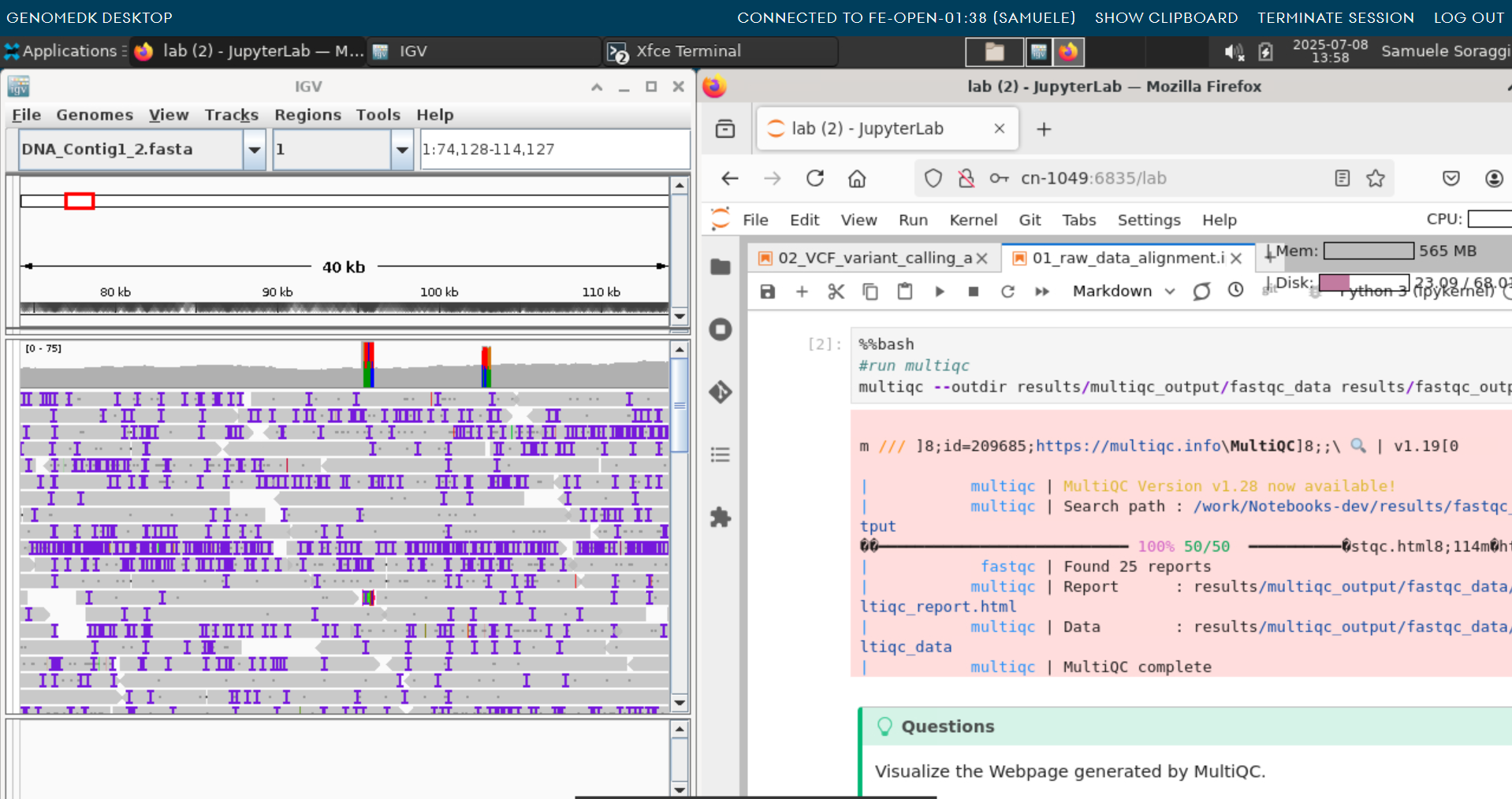
At GenomeDK, we’re proud to support Danish research and teaching with powerful, flexible computing infrastructure. One of the areas where this really makes a difference is in hands-on teaching environments.
We’d like to thank Samuele Soraggi for contributing this use case, based on the long-running summer school in NGS data analysis, organized by Mikkel H. Schierup, Stig Uggerhøj Andersen, and Samuele himself. Supporting this kind of high-impact training – where students gain experience with real data in a practical setting – really showcases the flexibility of the GenomeDK infrastructure.
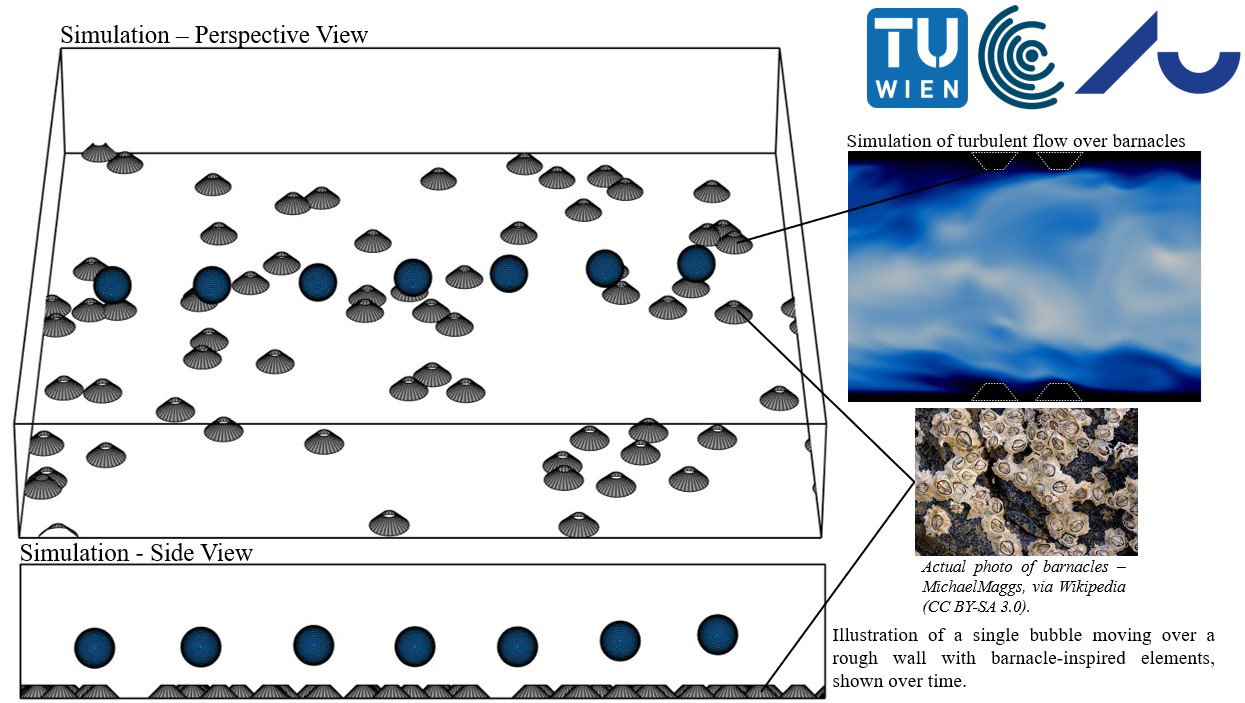
Unlike what the name, GenomeDK, might suggest, we have users from a wide range of fields, including those that are not related to genomes!
We are therefore very happy to present this slightly unusual use-case from Sina Nozarian, a PhD student at the Department of Mechanical & Production Engineering, Faculty of Technical Sciences (Tech) at Aarhus University.
Sina is supervised by associate professors Pourya Forooghi and Mahdi Abkar, and is currently on a research mobility stay at TU Wien (in Vienna), collaborating with Professor Alfredo Soldati specifically on the topic presented here.
Please help us circulate the workshop invitations to any relevant departments/groups, thanks!
Are you a student or academic, current or future user of the GenomeDK high-performance computing (HPC) system? Or are you just curious about HPC and how you can utilize it in your work? Do you need to learn to use GenomeDK, or wish to become a better and more organized user?
Then join us in this series of GenomeDK workshops where we guide you from a general introduction to advanced usage. Each workshop targets increasing difficulty levels, so you can join the sessions that fit you best.
Date and time: Thursday, October 10th, 11:00-15:00
Location: Building 1540, room K26.
We will cover the following topics:
Login and public-key authentication
File systems
Basic commands
Project management
File transfers and downloading data
Software installation and management
There will be a break for questions and lunch (not included) at 12, and again more time for questions and problem solving during the workshop. The only prerequisite is to have a working account on GenomeDK and a laptop - any extra knowledge is of course welcomed.
Summer is approaching (in a very wet fashion here in Aarhus) quickly and so it’s time for another newsletter.
We are thrilled to welcome 175 new users to the GenomeDK community (so far) this year! Whether you’re a researcher, student, academic clinician, or company, we are excited to support your data-driven endeavors, and wish you a very nice summer!
In the wake of the recent announcement from the Institute of Biomedicine, Faculty of Health, Aarhus University, where the use of Chinese sequencing companies and collaboration with Chinese universities was prohibited, many with sequencing needs must find alternatives.
We are happy to distribute this announcement from our close collaborators at the MOMA NGS Core Facility. Note that the MOMA NGS Core Facility can deliver your sequencing data directly to a project folder on GenomeDK.
We’re now well into 2024 and it’s time for the 10th edition of the newsletter. 2023 was probably one of the most transformative and busy years in the history of GenomeDK. In this newsletter we’ll touch on some of the big events. We’ll also provide you with some tips for keeping track of your usage of GenomeDK.
“The description fairly presents how IT general controls in relation to Aarhus Genome Data Center’s GenomeDK HPC services were designed and implemented throughout the period from 1 September 2022 to 31 August 2023;”
These are the words from our independent, external auditor following this year’s audit. We are happy to say that GenomeDK passed the audit with flying colors and have now, for the third year in a row, obtained a ISAE 3000 declaration with a focus on ISO 27001.
What does this mean? It means that the auditor has found that our policies, procedures, and controls with regards to information security have been found suitable and adequate by the auditor.
The ISAE 3000 declaration, supplemented by our ISO 27001 certification, highlights how seriously we take security.
It’s 2023 and we finally have a news section. The news section will be a mix of announcements, newsletters, press releases, technical posts, and short updates. Downtimes will still only be announced on the status page and via e-mail.
Previous newsletters have been added to this section already, so if you want you can take a trip down memory lane.
We’ve entered the year 2023 and so it’s time for another newsletter.
In 2022 we were happy to welcome 188 new users. 124 new projects were created. You also all managed to spend 28 mio. billing hours spread over 15 mio. jobs!
First of all, happy New Year! We hope that you’ve enjoyed the holidays.
In 2021 you all submitted 19 mio. jobs and used 21 mio. billing hours worth of compute. During the year, storage usage grew from 7.5 PB to 9.6 PB, and peaked at 10 PB.
Last, but not least, welcome to the 200 users that joined us during 2021!
Summer is upon us and so it has become time for the 2021 summer newsletter. There’s plenty to cover this time as the past six months have been both eventful and busy at GenomeDK.
Welcome back from a well-deserved Christmas vacation.
This time we will cover a few important changes to the queueing system that will be introduced over the coming months. We also look back at some of the work that has been done to reorganize our storage. And then we are now a DeiC national HPC facility! Read more below.